
May 2026
by Executive Director, Shannon R. Stratton
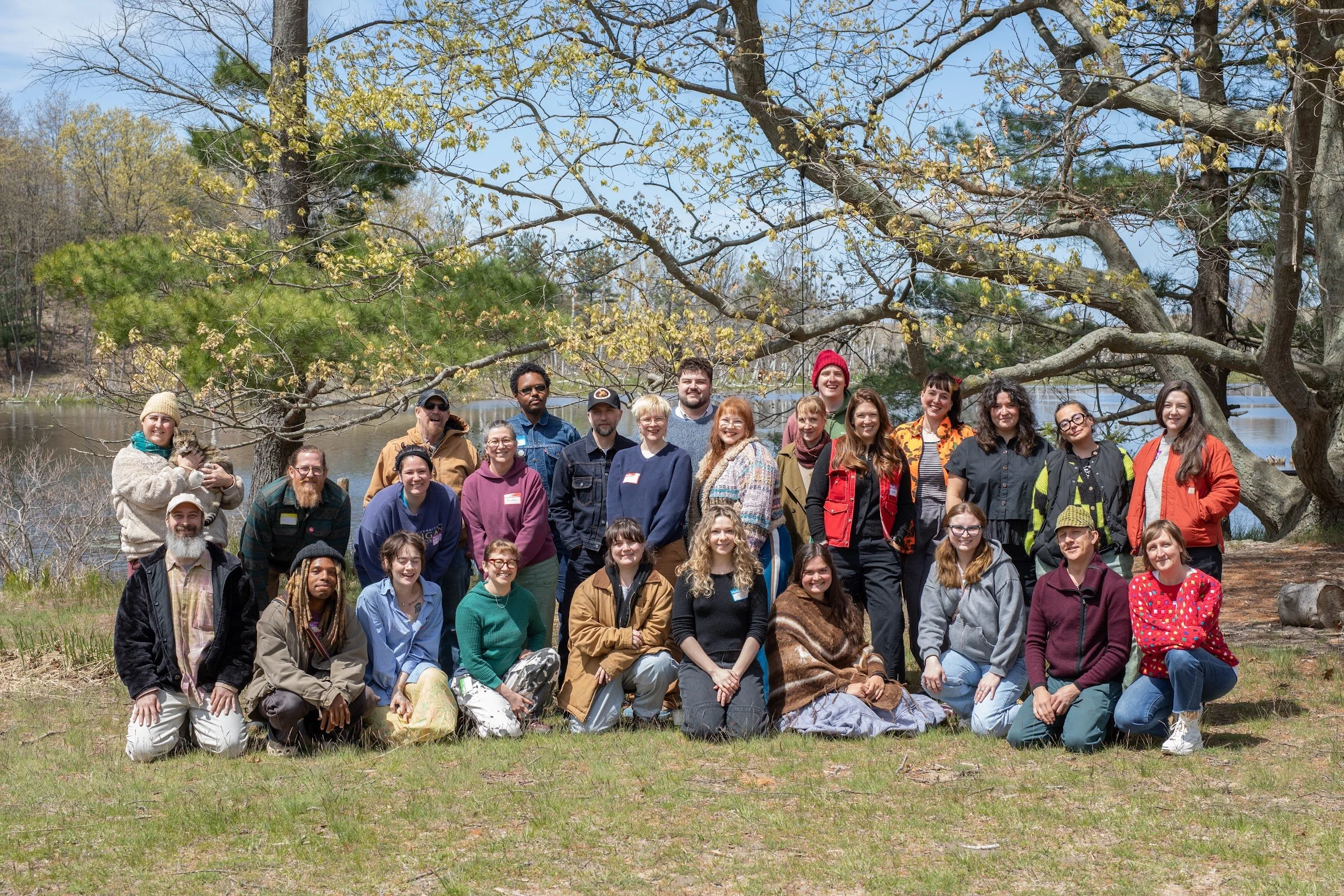
Staff photo from the 2026 Spring Assembly. photo by Candice Whitfield
You might be surprised by how much happens at Ox-Bow in spring. Long before summer begins, we're deep in it behind the scenes — reviewing scholarship and fellowship applications, hiring staff, planning our summer benefit. Building a seasonal community from scratch is its own kind of production, not unlike staging a play or throwing a very large party. So much has to happen before the curtain goes up.
One of the most meaningful parts of that preparation is interviewing our fellowship applicants. Fellows are senior BFA or MFA artists who join us each summer for a three-month residency that weaves together studio time, a teaching assistantship, part-time campus work, and a great deal of community building. They come from across the country, from different schools, and from a wide range of ages and life stages — typically 21 to 45 — which creates a remarkably rich cohort. The bonding that happens among people with such different lived experiences is its own form of education, one you rarely encounter in traditional institutions, and one that may do more to sustain an artist's practice over time than any conventional classroom.
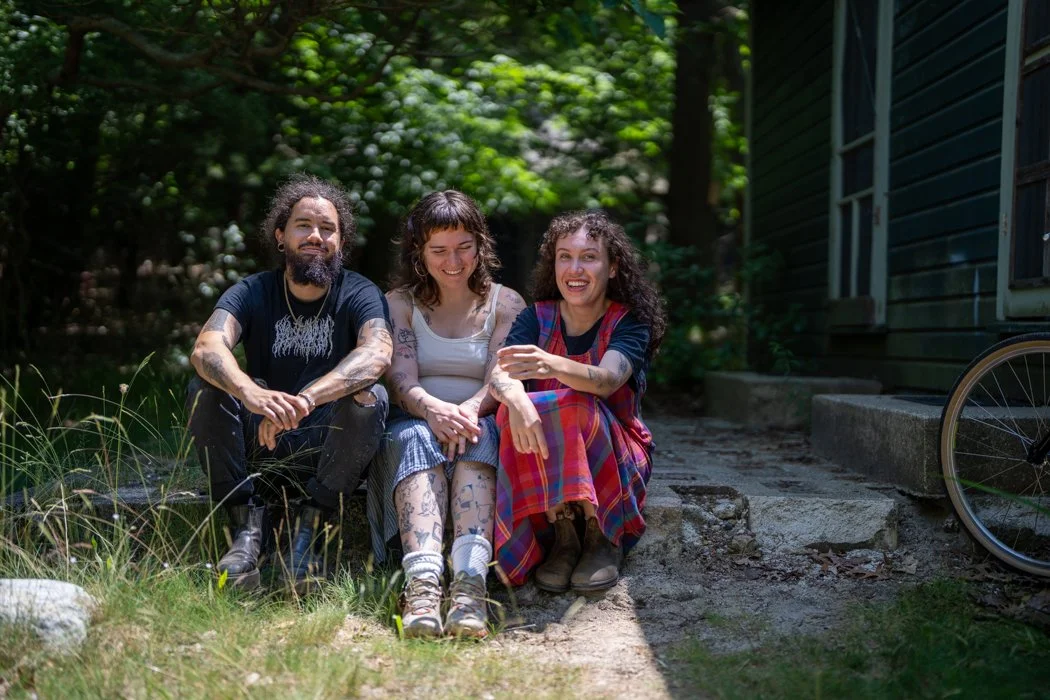
2025 Summer Artists-in-Residences Richard Moreno, Samantha Maurer, and Isabella Schubert-Jones. photo by Nolan Zunk
If you haven't spent time at Ox-Bow, you might not realize that community and hospitality are, in many ways, the real curriculum. With more than 100 artists living on campus at any given time, the core experience here is one of learning from one another — in the studio, yes, but also in relationship to the natural world, around a shared meal, or at a late-night dance. The ingredients have always been the same: make art within the context of nature, unplugged from the pace and noise of urban life; make art alongside artists across disciplines, career stages, and generations; and find joy in fellowship — over good food, in play, and sometimes, in quiet.
The campus is small, humble, and beautiful. In many ways it's a relic from another time — a time before capitalism's downward pressure began distorting what education is for. We are not beholden to the metrics imposed on higher learning, metrics that have grown even harsher with recent U.S. legislation requiring schools to report graduates' wages to receive funding. Measuring education by that standard fundamentally undercuts what most people actually gain from studying the arts and humanities: the capacity for critical and creative thinking; the resilience and empathy built through sustained practice; the patience to work through difficulty; the ability to receive feedback on the most personal of expressions. These are lessons that don't show up in wage data, but they leak into daily life in ways that genuinely shape the world and the people in it.
This past March I returned to Makoto Fujimura's Culture Care, subtitled Reconnecting with Beauty for Our Common Life. I've been sitting with a question that feels urgent right now: how do we articulate the value of art — and of artists — to civic life? Too often, making that case means reaching for ROI: How do the arts boost tourism? Deliver social services? Provide entertainment? Reflect political identity? In each of those framings, art becomes a tool for something else, appreciated not on its own terms but for what it can be made to justify. Fujimura offers a different frame. He writes about artists' deep capacity to cultivate and share generosity and empathy — to point toward abundance and connection — as a necessary counterweight to the anxiety, scarcity, and transactional relating that have come to dominate so much of our common life. An encounter with art, he suggests, can open us toward generative thinking, loosening the grip of our quid pro quo expectations.


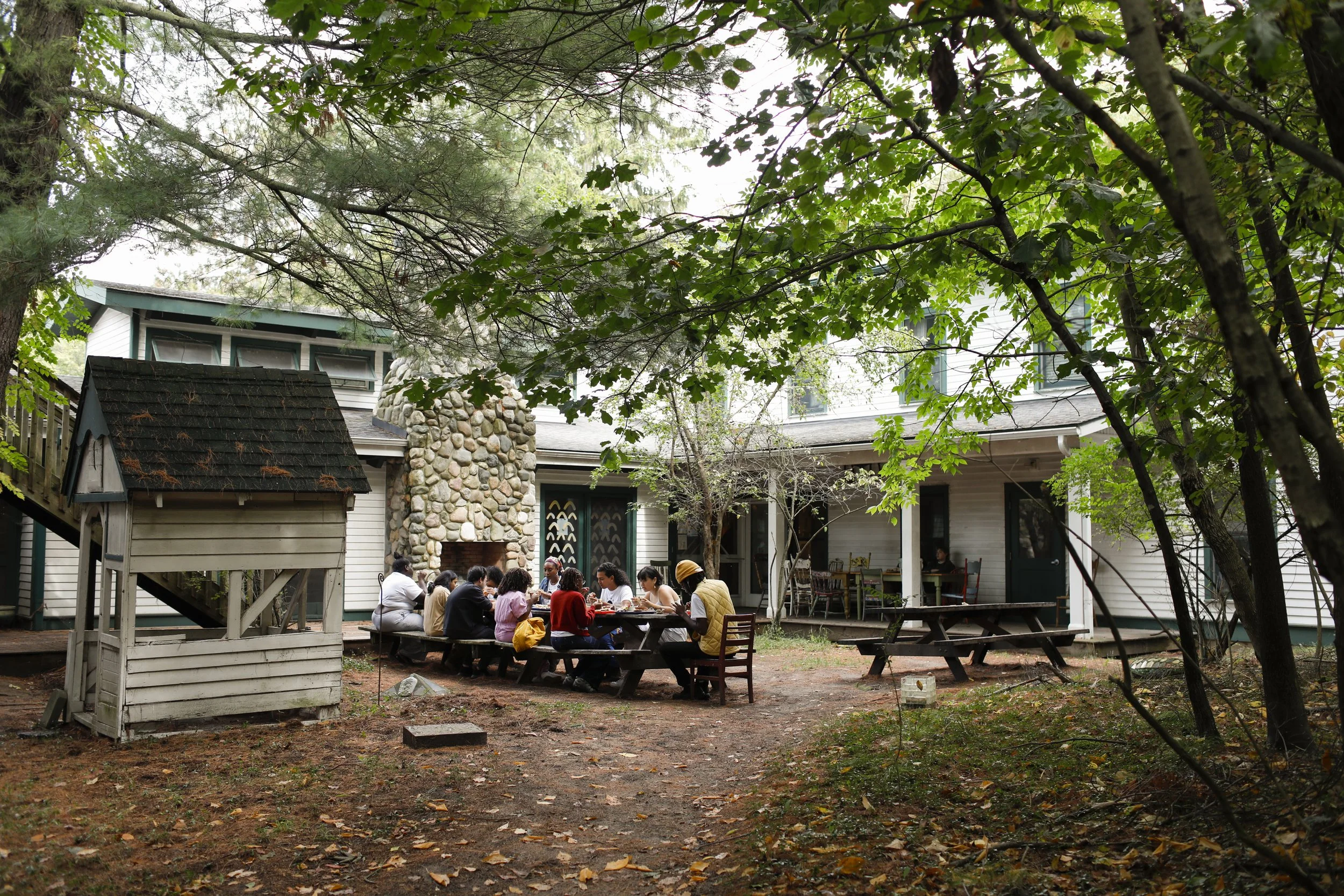
That reframing stays with me. When we raise money for artists and arts organizations, we tend to appeal to people's belief in culture as a civic good. What we talk about less — and what I want to say more plainly — is this: investing in the arts is also an investment in the kinds of citizens our communities need. Artists take risks to make things that are beautiful, critical, funny, or complex. They do the slow, difficult work of metabolizing the world we live in, on all of our behalf. They value that service to society enough to risk everything for it. That's worth supporting. And it's worth saying so.
As we look ahead to summer, I hope, if you're reading this, that I'll see you on the meadow. Whether you come as a student or faculty member, a resident, fellow, or visiting artist, or simply as a community member who shares a meal with us or wanders our adjacent forest, know that your presence matters. Each of you is, as Fujimura puts it, a cultural custodian. We need you here. We need each other.
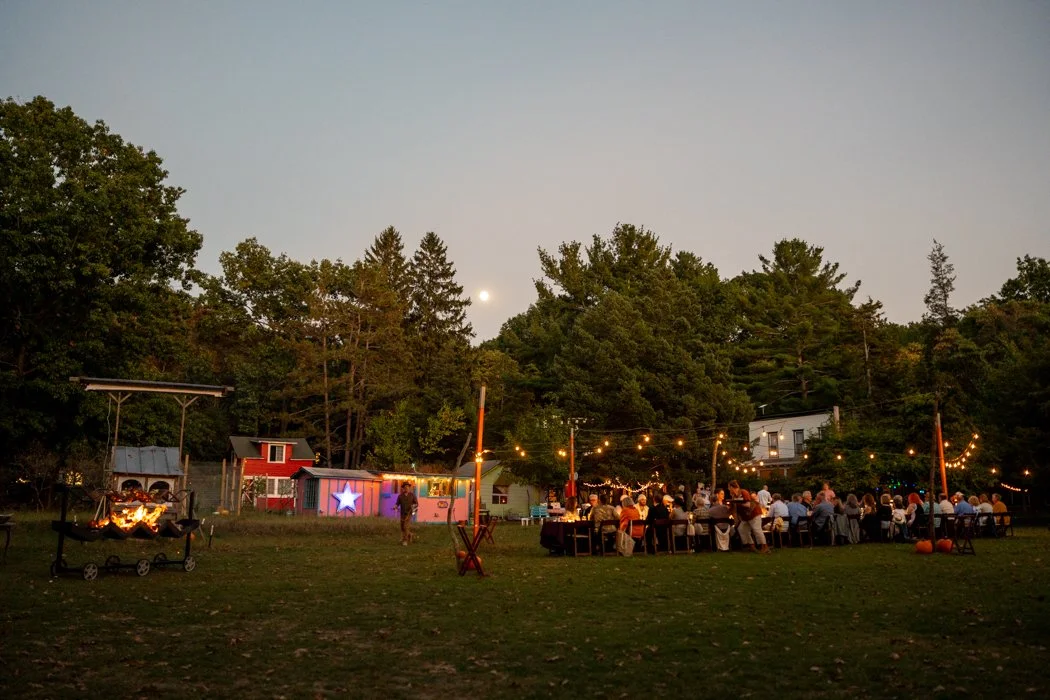
Community dinner on the Ox-Bow meadow. photo by Nolan Zunk