Multi-Level Painting: Form, Process, & Meaning

January 7–22, 2027
11:00 a.m. - 1:30 p.m. EST/10:00 a.m. - 12:30 p.m. CST
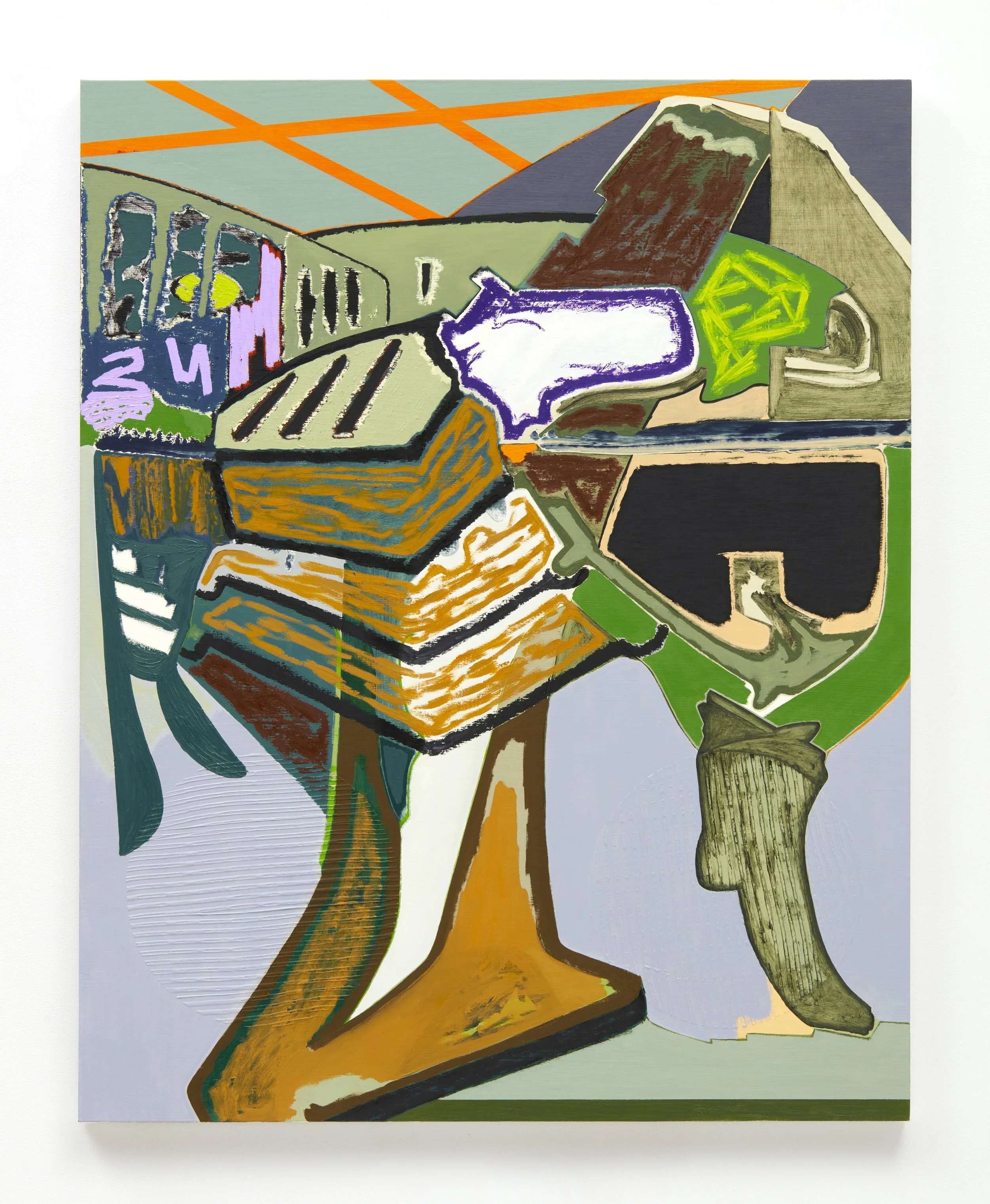
Untitled, 2026, oil on canvas, 45 x 36 inches

Multi-Level Painting: Form, Process, & Meaning

with Magalie Guérin

This course for beginning to advanced students will include extensive experimentation with materials and techniques through individual painting problems. Emphasis will be placed on active decision-making to explore formal and material options as part of the painting process in relation to form and meaning. Students will pursue various interests in subject matter. Students may choose to work with oil-based media. Demonstrations, lectures and critiques will be included.

Pricing Information: Tuition & Fees

Registration Information: Monday, November 16, 2026

SAIC/For Credit Course Code: PAINTING 605 001 | 3 credits

About the faculty artist

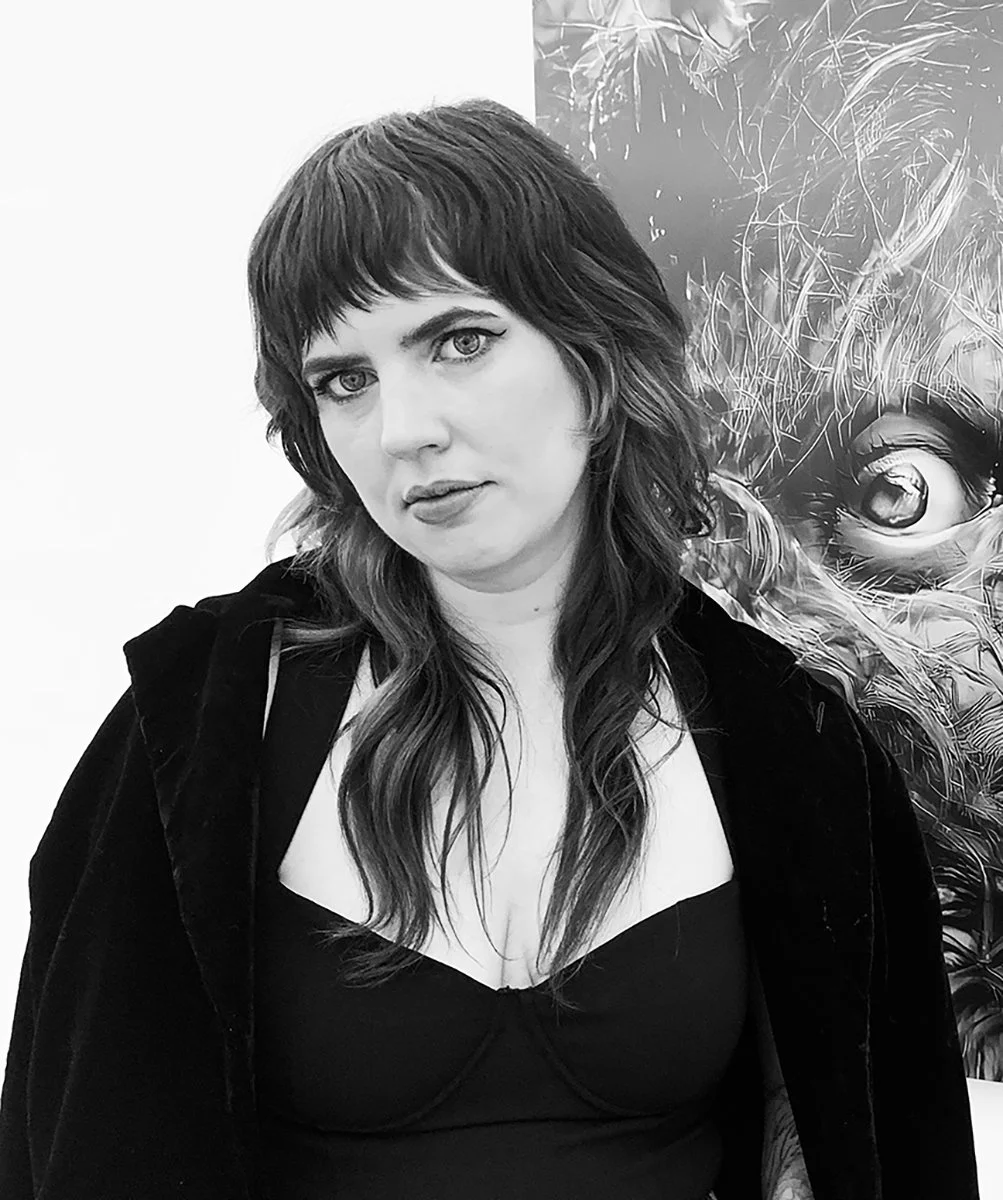
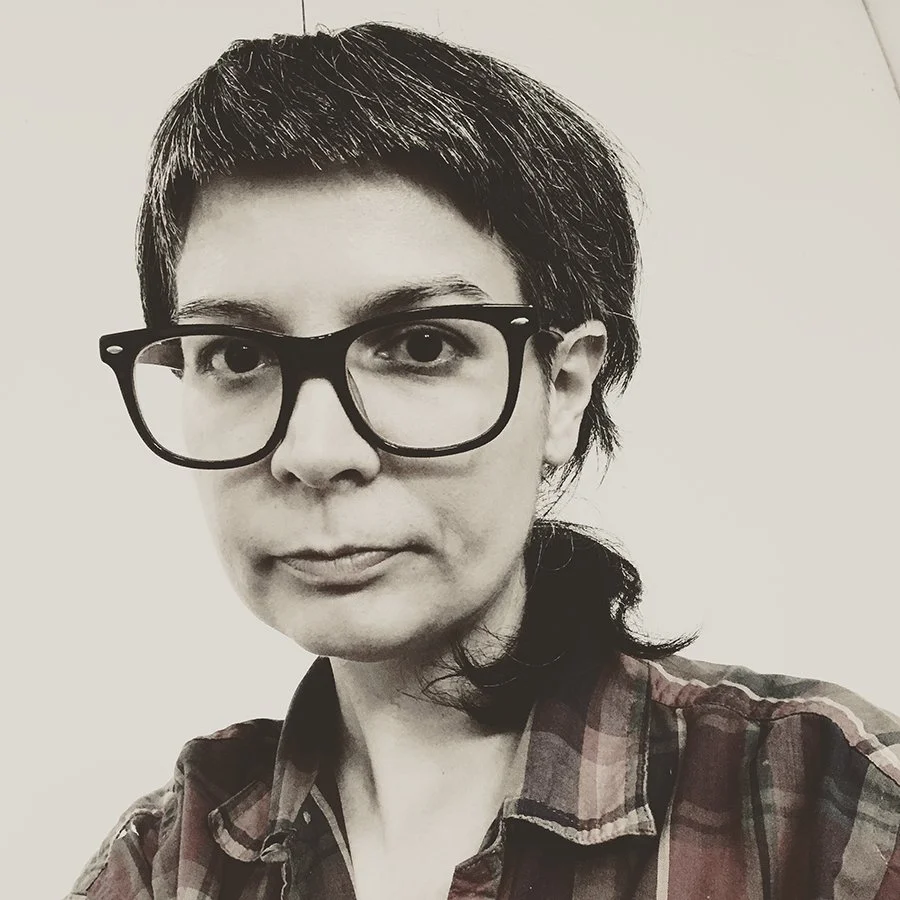
Magalie Guérin (she/her; b. Montreal) is an artist based in Marfa, Texas. She works primarily in painting and ceramics and describes her work as shape-oriented, with the experience of foreignness and color relationships at its core. She holds an MFA in Painting and Drawing from the School of the Art Institute of Chicago (2011) and is represented by Corbett vs. Dempsey in Chicago, Sikkema Malloy Jenkins in New York, and Galerie Nicolas Robert in Montreal. She has exhibited internationally, and her work is in the collections of the Berkeley Art Museum, Speed Art Museum, DePaul Art Museum, Hydro-Québec, and the Caisse de dépôt et placement du Québec. She is the author of NOTES ON, a compilation of studio writings published by The Green Lantern Press in 2016 (second edition, 2019), and teaches at the School of the Art Institute of Chicago and the College of DuPage. Guérin is the recipient of two Pollock-Krasner grants (2024, 2018), a Pace Award at the Fine Arts Work Center in Provincetown (2019), and a Chinati Foundation residency (2018).
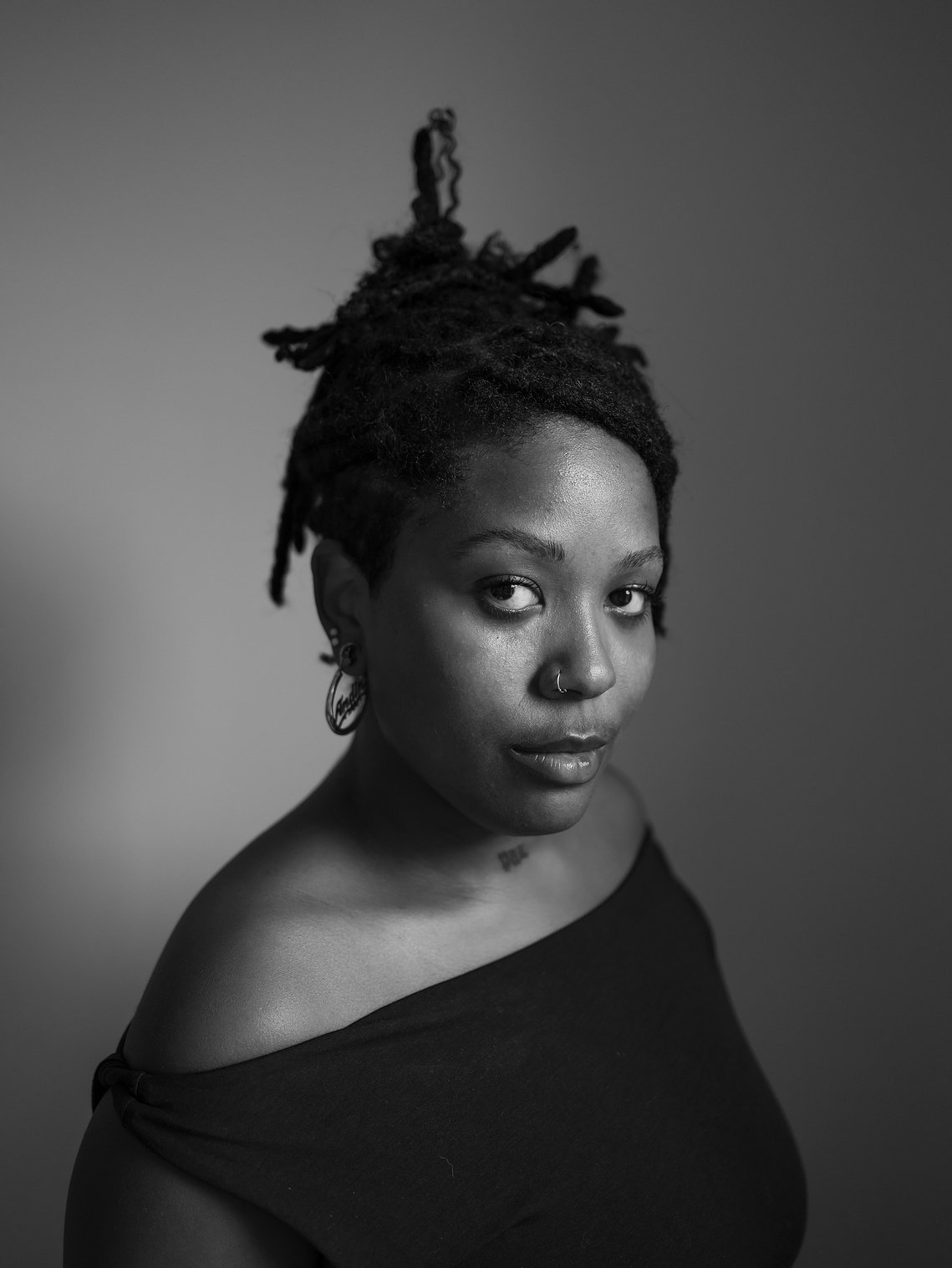
Reclaiming the Landscape: Photography, Place & Belonging

January 10–23, 2027

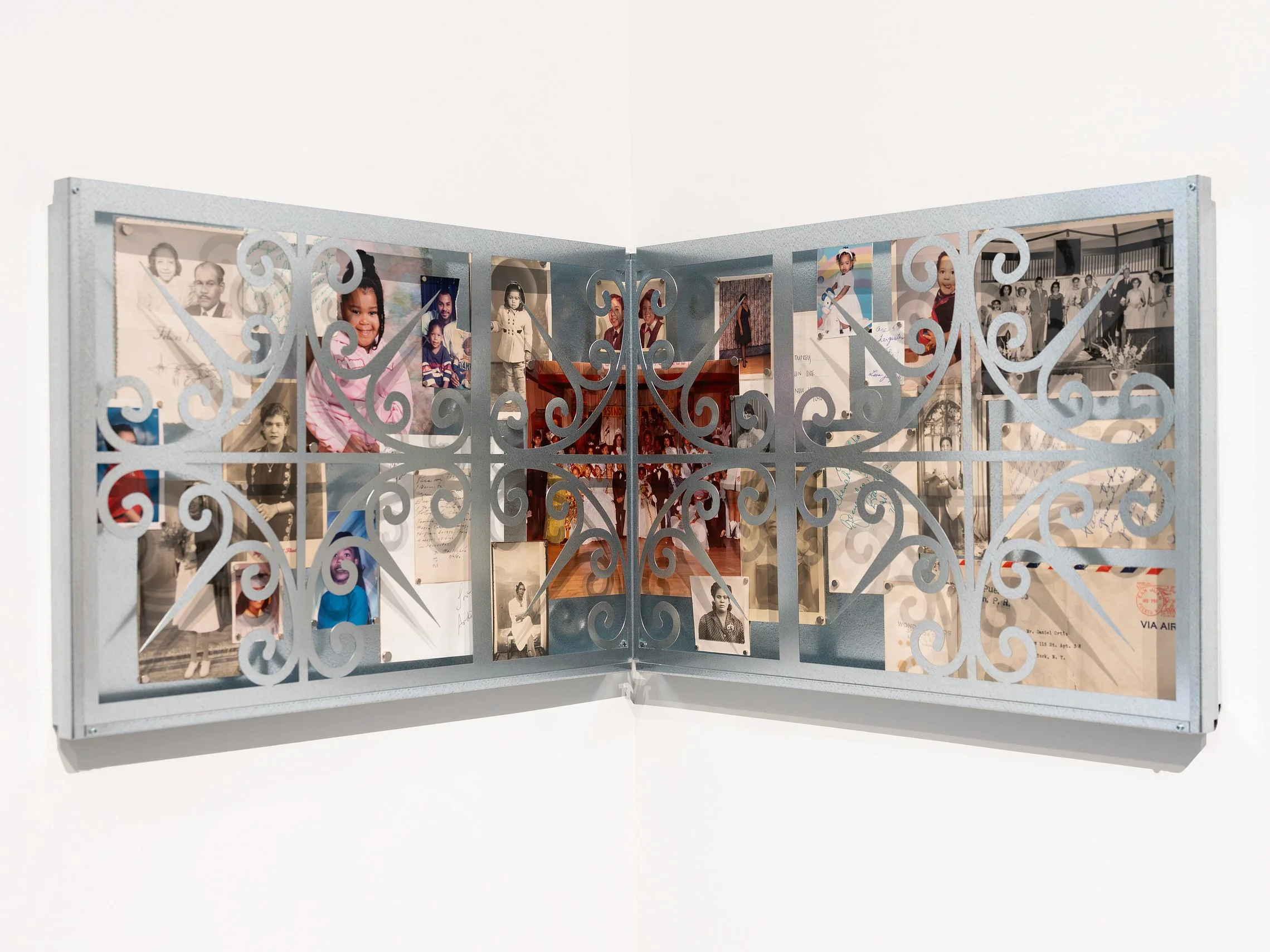
Andina Marie Osorio, Untitled (ven sin nombre), 2026, Galvanized steel, archival photographs, magnets, 41.116 in. x 14.305 in. x 1 in.

Reclaiming the Landscape: Photography, Place & Belonging

with Andina Marie Osorio

Landscape photography has long shaped how we understand land, identity, and belonging. Students will examine how photographers have reinforced and challenged dominant narratives of the American landscape, including nationalism, settler colonialism, and Manifest Destiny, while developing their own photographic practice through image-making, editing, sequencing, and printing. Working across Ox-Bow's campus and the surrounding environment, participants will experiment with pinhole photography, darkroom printing, alternative Polaroid processes, and zine making while creating a body of work that reflects their own relationship to place, memory, and history. Demonstrations, critiques, and discussions support both technical skill-building and conceptual development. Readings and discussions consider photography's role in shaping narratives of place through artists including Dawoud Bey, Ana Mendieta, and Zoe Leonard. Students will read selections from Robin Wall Kimmerer's Braiding Sweetgrass and excerpts from Gayatri Chakravorty Spivak's Can the Subaltern Speak?. A screening of Microcosmos by Claude Nuridsany and Marie Pérennou expands conversations about observation, ecology, and the natural world. Students will construct pinhole cameras, create photographic studies throughout Ox-Bow's landscape, and experiment with editing, sequencing, printing, and bookmaking. The final project may take the form of a zine, a series of photographic prints, a collage, or an installation that reflects each student's personal engagement with landscape and place. Students working in the darkroom should note that Ox-Bow's facilities support black-and-white film processing only. Those planning to shoot analog should bring a 35mm camera and be comfortable processing black-and-white film.

Pricing Information: Tuition & Fees; $175 lab fee

Registration Information: Monday, November 16, 2026

SAIC/For Credit Course Code: PHOTO 616 001 | 3 credits


About the faculty artist

Andina Marie Osorio (she/her) is a lens-based artist based in Brooklyn, New York. Osorio’s practice explores the intersections of memory, identity, queer affect, migration, and Black femme sexual politics through assemblage, portraiture and archival work centered on the familial and queer experience.

Osorio’s work has been exhibited at the Studio Museum in Harlem, Ogunquit Museum of American Art, HESSE FLATOW, Sinclair Gallery, The Latinx Project at NYU, The Clemente and Webber Gallery LA. Residencies include Sharpe-Walentas Studio Program (2024-2025), Center for Photography at Woodstock, Fire Island Artist Residency, Ox-Bow School of Art & Artists’ Residency and Wassaic Project. She is the recipient of the Aperture Creator Labs Photo Fund, was a finalist for The Robert Giard Grant for Emerging LGBTQ+ Photographers and the NYFA City Artists Corps Grant. Her work has been featured in Elephant Magazine, Port Magazine, Musee Magazine and W Magazine. She received her BFA in Photography and Related Media from the Fashion Institute of Technology (2019) and an MFA in Photography from the Yale School of Art (2024).

Winter Weaving

January 10–23, 2027

Winter Weaving

with kg

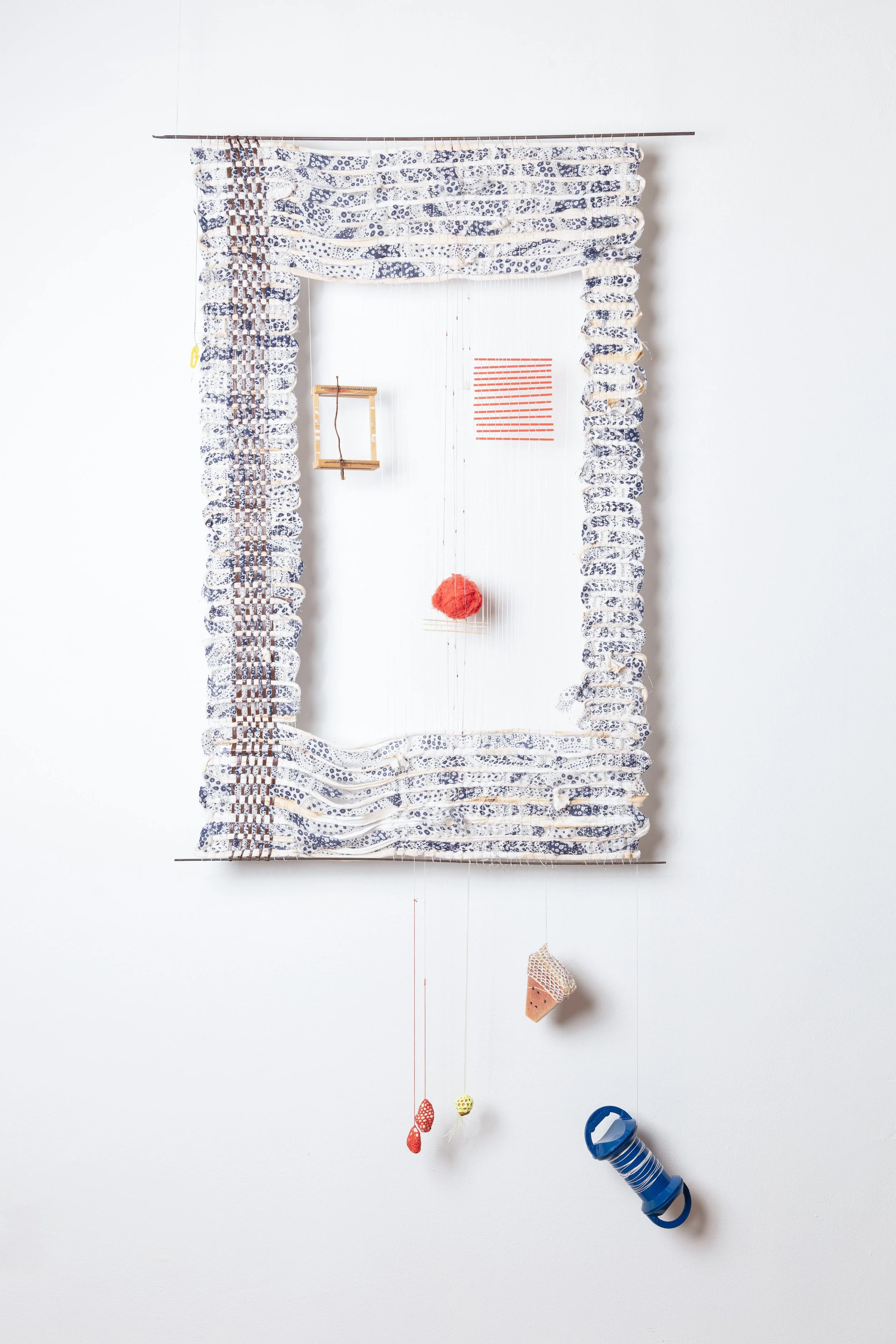
Weaving is a process for contemporary makers to explore narratives of identity, labor, history and the body. This course explores weaving’s connection to narrative, addressing how meaning can be made through conceptual and process-based approaches. Students will learn weaving techniques and execute a number of finished works. Students will focus on narrative in relationship to weaving through imagery, found objects, woven structure, performance, display, warp, and weft relationships, color, and dig into the process of weaving itself as narrative work.

Pricing Information: Tuition & Fees; $175 lab fee

Registration Information: Monday, November 16, 2026

SAIC/For Credit Course Code: FIBER 621 001 | 3 credits

kg, Everywhere You Go, 2025, 36" x 41”

ill drive you
a stretch to reach only
to return
to flying this kite
don’t forget


About the faculty artist

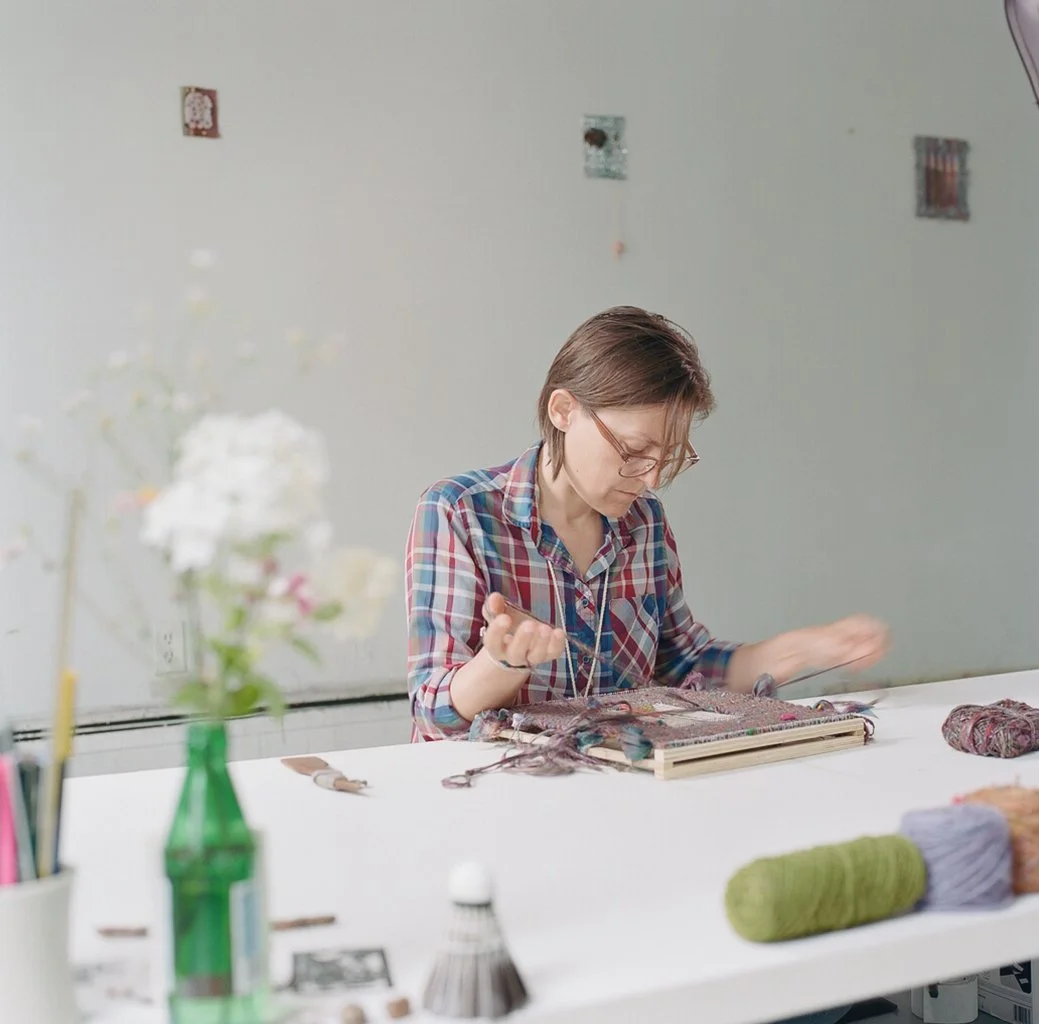
kg (they/them; b. Poland) makes weavings and writes poetry from their home studio by the lake in Chicago. kg values the small the domestic and the everyday, situating those politics in their studio and curatorial practices. They have exhibited work with Horse and Pony (Berlin), The Brooklyn Academy Of Music,The Bruce High Quality Foundation and The Gowanas Ballroom (New York), Left Field Gallery and Adjunct Positions (Los Angeles), Katherine E. Nash Gallery (Minneapolis), Monique Meloche Gallery, Gallery 400, Julius Caesar and LVL3 (Chicago), John Michael Kohler Art Center (Wisconsin) and their most recent solo exhibition, Here Comes That Feeling at Hawthorne Contemporary in Milwaukee. Some Kind Of Duty, Their expansive weaving survey hosted by DePaul Art Museum is available as a monograph through the museum shop and online. In 2017 kg attended Skowhegan School of Painting and Sculpture and The Vermont Studio Center as a fellow in 2018. Recent exhibitions include Intranarratives hosted by the Musée d'art Contemporain de Montréal and Beyond: Tapestry Expanded at Peeler Art Center at DePauw University, Floral Methods curated by Theo Bignon at Bunker Projects in Pittsburg, Pennsylvania, Never. Again! a solo exhibition in Color Club’s Museum Space, and We May Be Soft at the Milwaukee Institute of Art and Design.

Nerikomi & Colored Clay Lab

January 10–23, 2027

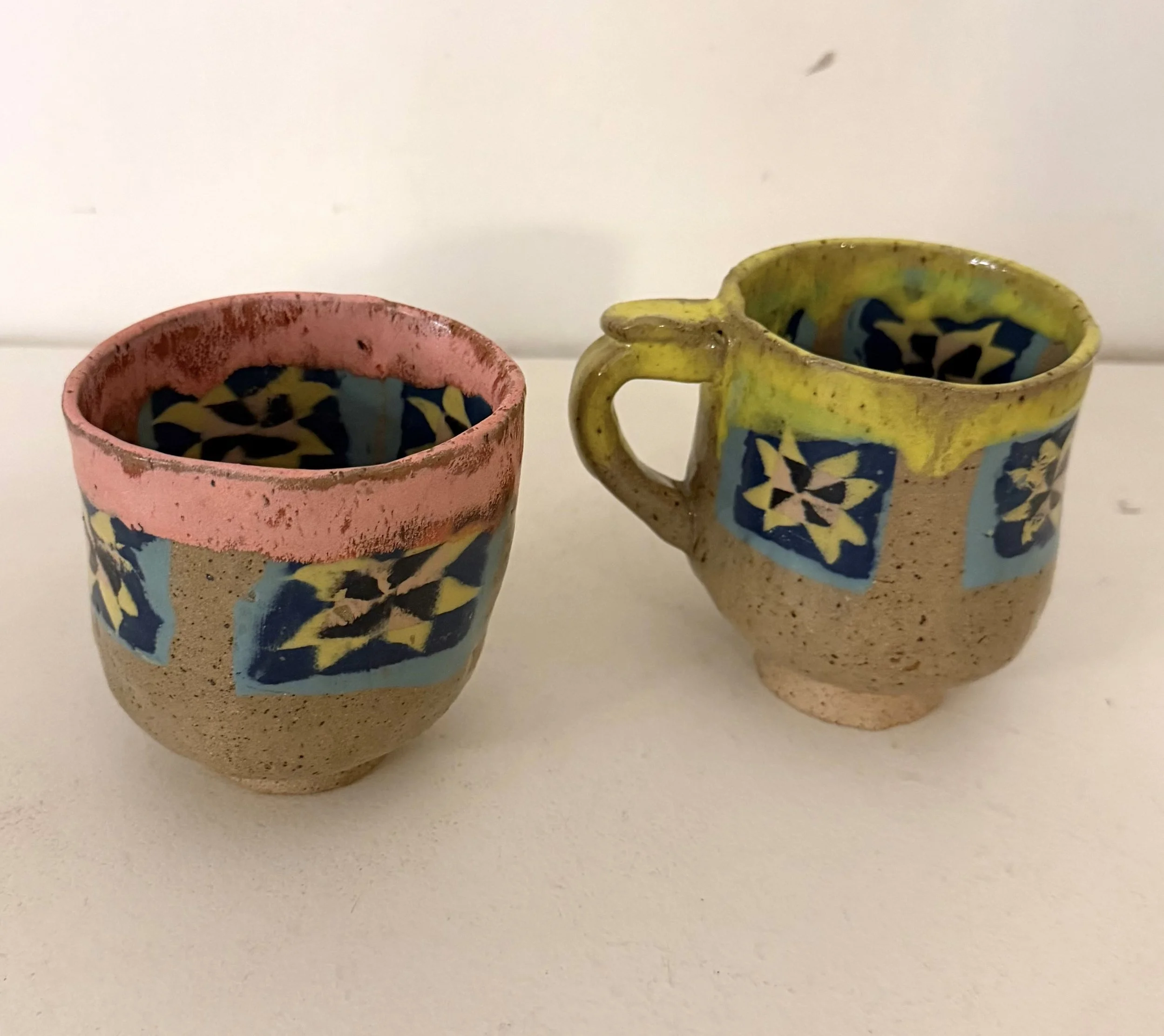
Chris Edwards, Quilt Pattern Nerikomi Cups 2026, colored clay, 5x3x3 in

Nerikomi & Colored Clay Lab

with Christopher Edwards and Rachel Niffenegger 

Explore the expressive possibilities of colored clay through nerikomi, the Japanese technique of creating patterns by layering, stacking, slicing, and recombining colored clay bodies. Students will learn to tint clay using raw ceramic pigments and stains before developing their own palette of colored clays. Demonstrations include clay coloring and testing, pattern development, lamination, cane construction, marbling, slab building, wheel throwing, trimming, and finishing techniques that preserve crisp pattern definition while integrating color into the ceramic form itself. Through lectures, critiques, and demonstrations, students will examine historical and contemporary approaches to colored clay, considering pattern, process, and material as inseparable elements of ceramic practice. Artists discussed may include Dean McRaine, Victoria Rickson, Yukiko Takahashi, and Dorothy Feibleman in addition to other contemporary practitioners working with nerikomi and agateware traditions. Students will read selected excerpts from Nerikomi: The Art of Colored Clay by Thomas Hoadley and Vitamin C: Clay and Ceramic in Contemporary Art in addition to other contemporary writings on colored clay, and view documentary footage featuring ceramic artists whose practices center on pattern and material experimentation. Students will begin by creating a personal library of colored clay bodies and pattern samples through a series of structured material experiments. Subsequent assignments will investigate techniques for translating patterned clay into functional and sculptural forms while refining craftsmanship and color relationships. The final project will be a cohesive body of ceramic work that demonstrates technical proficiency with colored clay and a personal approach to nerikomi.

Pricing Information: Tuition & Fees; $250 lab fee

Registration Information: Monday, November 16, 2026

SAIC/For Credit Course Code: CERAMICS 675 001 | 3 credits


About the faculty artist

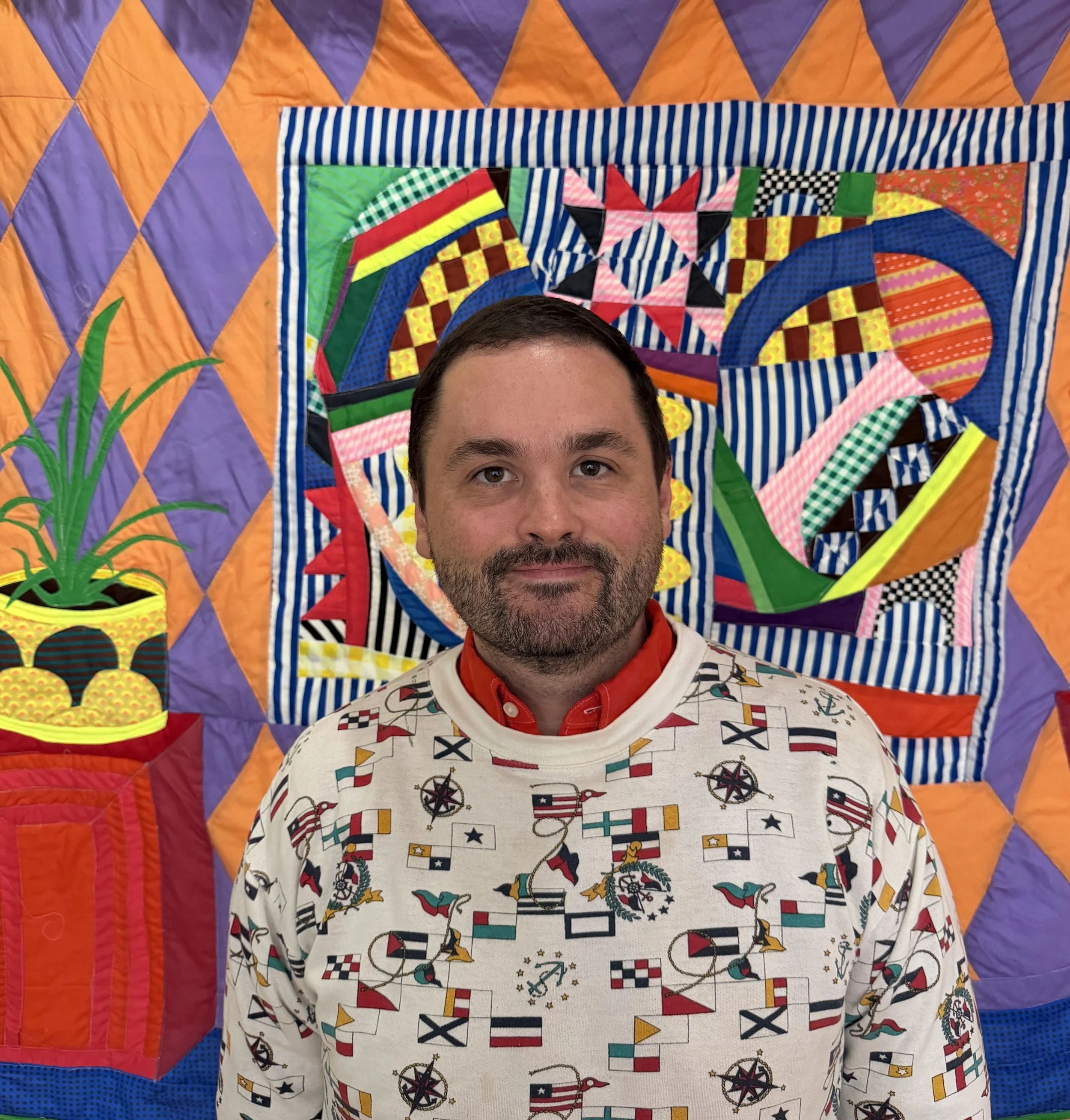
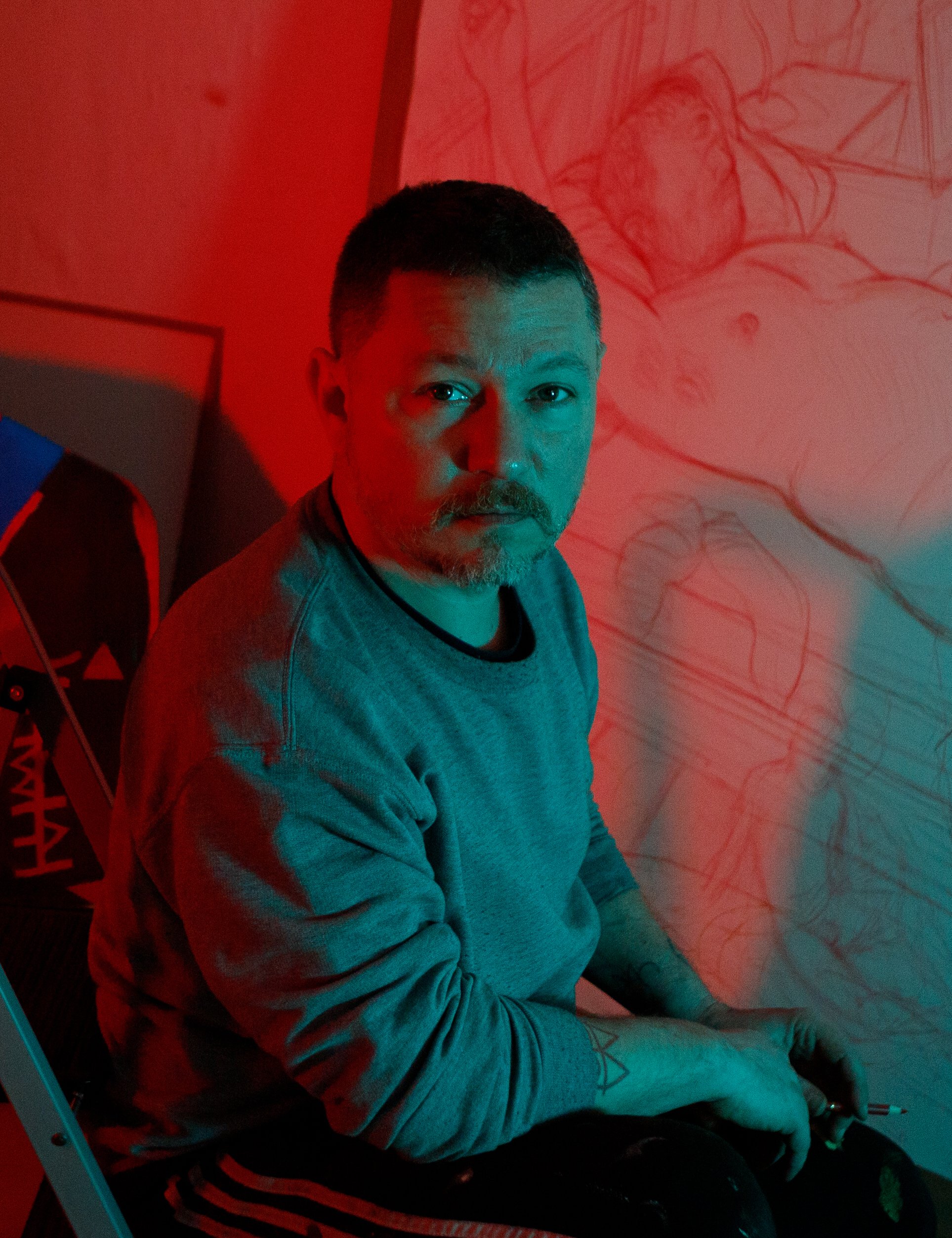
Chris Edwards (he/him) is an artist and licensed clinical social worker. In his artistic practice, he works primarily in quilting and ceramics, creating odes to small, important things. His quilting and pottery intersect through a shared language of pattern-making, and images of his pottery show up in his quilts. He has taught variations of the class Soft Compositions with Lauren Gregory at Ox-Bow School of Art & Artists’ Residency since 2022. He lives in Chicago with his husband, dog, and two cats. He has exhibited work at Roundabouts Now (Kingston, NY), McLean County Arts Center (Bloomington, IL), Western Exhibitions (Chicago, IL), Ox-Bow House (Saugatuck, MI), Wrong Marfa (Marfa, TX), Elephant Gallery (Nashville, TN), Adds Donna (Chicago, IL), Tusk (Chicago, IL), LVL3 (Chicago, IL), Oggi Gallery (Chicago, IL), Dreamboat (Chicago, IL), and Julius Caesar (Chicago, IL) and has an upcoming show at the Sarasota Arts Center. He received his MFA in Painting and Drawing from the School of the Art Institute of Chicago in 2011 and his Master of Social Work from the University of Iowa in 2014.

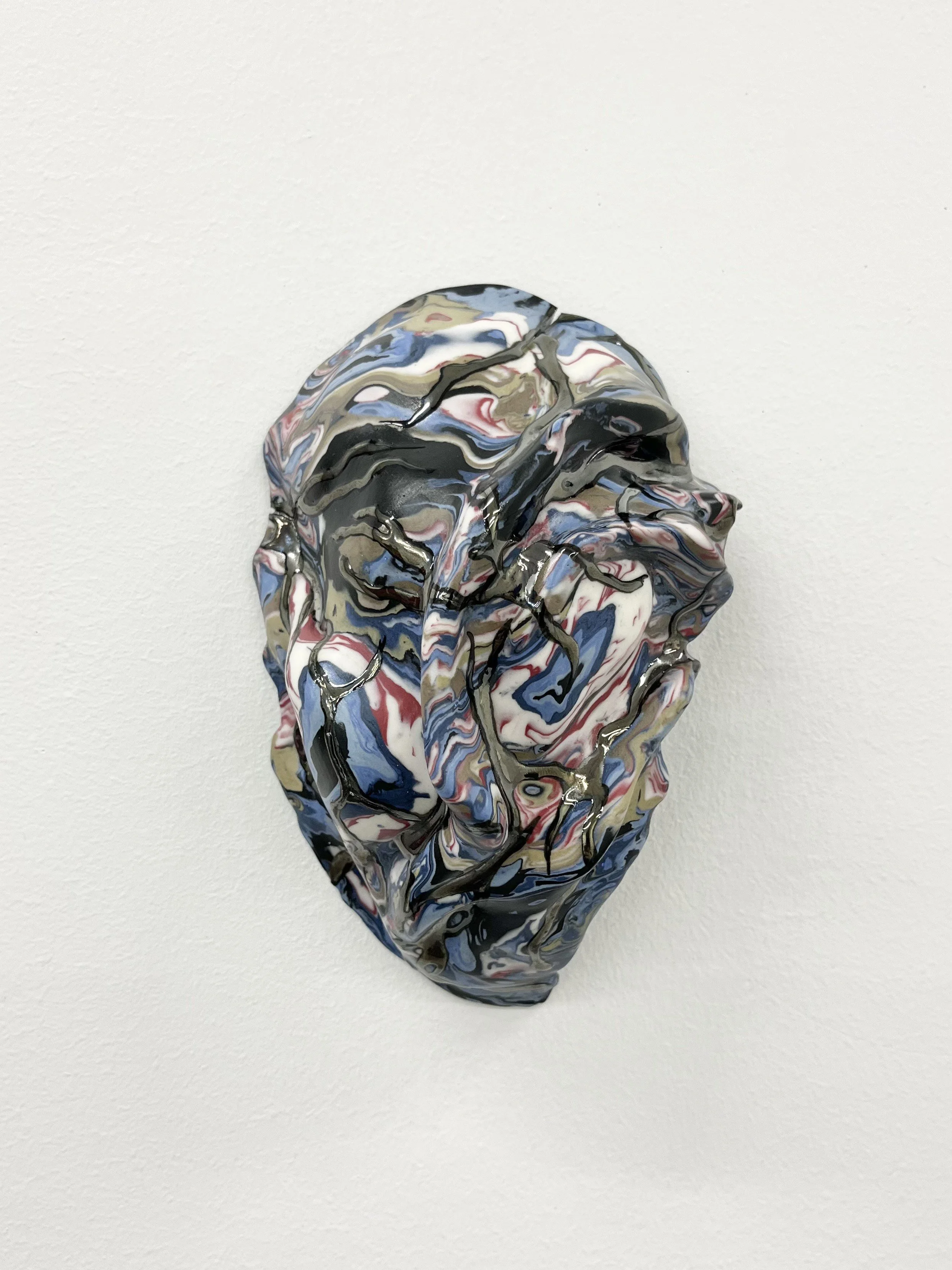
Rachel Niffenegger’s (she/her) interior psychological portraits appear from an evolving archive of visions conjured and scrambled in concert with chance based processes and generative technology. These wraiths are pulled from the folds of psychedelic clay, spiraled through mirrored metal work and suspended amongst haunted objects. Niffenegger’s work has been included in museum shows at the Museum for Modern Art in Arnhem, the Netherlands; the Museum of Contemporary Art Chicago; and in gallery shows in New York, Berlin, Chicago, Liverpool, Denver, and Milwaukee, among others. Niffenegger, born in Evanston in 1985, received her BFA from the School of the Art Institute of Chicago, her MFA from Northwestern University in Evanston, Illinois and attended De Ateliers in Amsterdam, NL. Amongst honors from Chicago Magazine and New City she was awarded The Meier Achievement award in 2023. Rachel was a Fellow in 2008 at Ox-Bow School of Art & Artists’ Residency and has been a faculty member at the School of the Art Institute of Chicago since 2015. She is represented by Western Exhibitions in Chicago and lives and works in Chicago.

Rachel Niffenegger, Spectral Shell I, 2025, glazed pigmented porcelain, 6.5x5x2 inches

Chaos Temple

January 10–23, 2027

Chaos Temple

with Elijah Burgher

What happens when we pick up a stick of charcoal or brush dipped in ink If we take seriously William S. Burroughs’ dictum that “all art is magical in origin [...] Paintings were originally formulae to make what is painted happen”? Magic offers artists a set of imaginative tools with which to think otherwise about the work they do. In this course, students will examine concepts and imagery from witchcraft, hermeticism, alchemy and the occult and then focus the materials, processes and psychic investments of the studio through the lens of spellcraft. Drawing will be emphasized as a research methodology and unique medium of expression. As part of a larger inquiry into symbols, we will study various examples of “unknown languages” such as the myth of Odin’s discovery of the runes, Austin Osman Spare’s sigil magic, the Martian scripts of the 19th century spiritual medium Hélène Smith, and the automatic techniques of the surrealists through slide lectures and guided drawing exercises. James George Frazer’s principles of sympathetic magic will be used to think differently about both figurative representation and the specificity and history of materials and tools in drawing, collage and painting. Additional themes will include origin myths, ritual, sacrifice, mimesis, divination, and chance. We will look at the work of artists including Jesse Bransford, Atis Rezistans/Ghetto Biennale, Judith Noble, Marjorie Cameron, Wifredo Lam and Emma Kunz. Readings will include excerpts from Ovid’s Metamorphoses and "Thee Splinter Test' by Genesis Breyer P-Orridge; and screenings will include films by Maya Deren and Scott Treleaven. Using James George Frazer’s “law of contagion” to think about source materials and wish fulfillment, students will use scissors and glue as magical weapons with which to resurrect failed artworks and discarded imagery as talismanic collages. This class will culminate in an indoor or outdoor installation of finished pieces.

Pricing Information: Tuition & Fees; $175 lab fee

Registration Information: Monday, November 16, 2026

SAIC/For Credit Course Code: PAINTING & DRAWING 606 001 | 3 credits


About the faculty artist

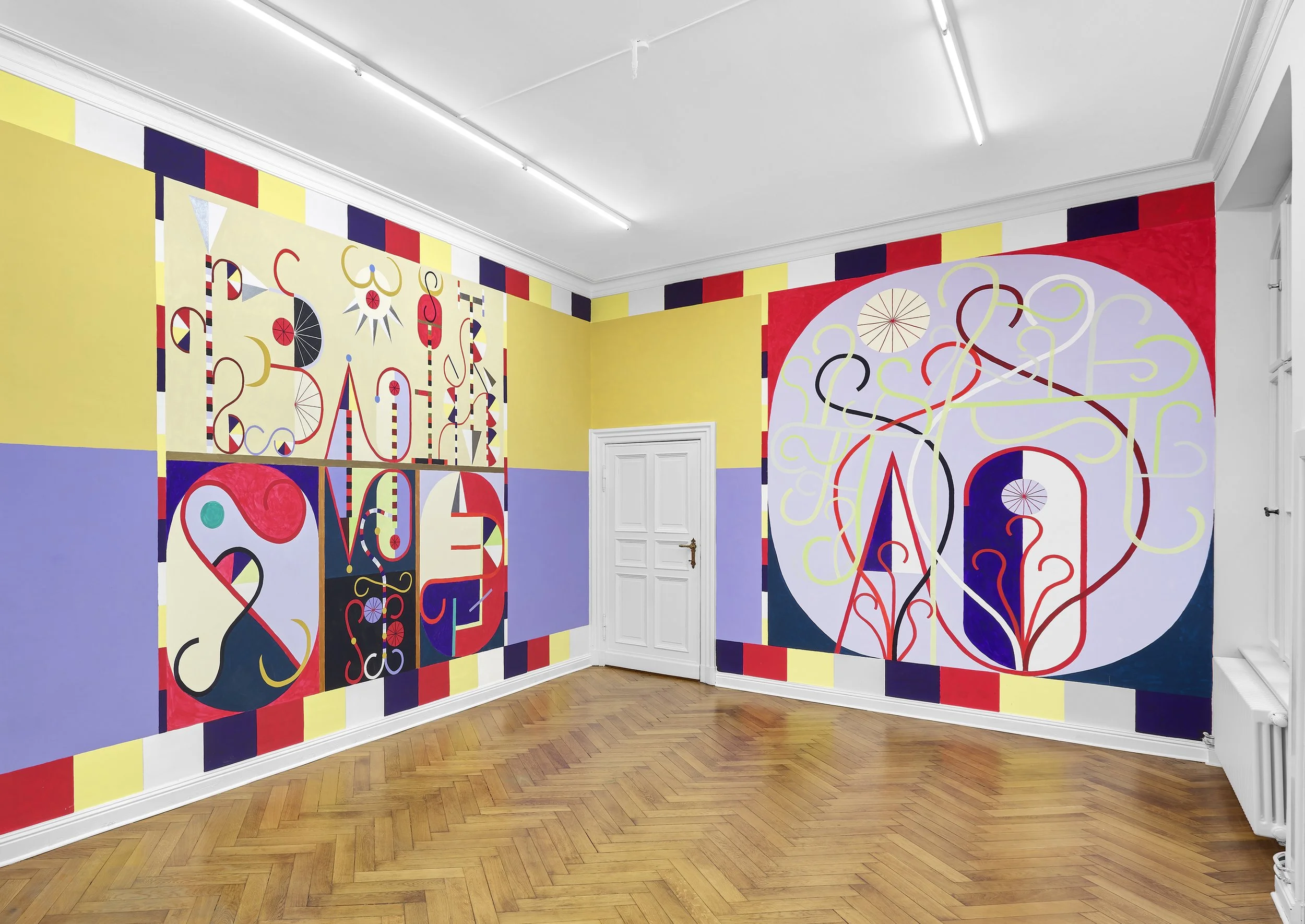
Using painting, drawing, and printmaking, Elijah Burgher (he/him) works at the crossroads of representation and language, figuration and abstraction, and the real and imagined. Drawing from mythology, ancient history, the occult, and ritual magick, Burgher cultivates a highly intimate code of symbolism to investigate the personal and cultural dynamics of desire, love, subcultural formation, and the history of abstraction. He was featured in Block Party at the Westmoreland Museum of American Art in Greensburg, Pennsylvania (2023); Scrivere Desegnando at the Centre d'Art Contemporain Geneva (2020), Queer Abstraction at the Des Moines Art Center (2019), For Opacity at the Drawing Center in New York City (2018), and the 2014 Whitney Biennial, among others. He is the co-author of Sperm Cult with Richard Hawkins, published by Bad Dimension Press in 2017. Burgher received a MFA from the School of the Art Institute, Chicago and a BA from Sarah Lawrence College in Bronxville, NY. He is represented by PPOW in New York, Western Exhibitions in Chicago and Ivan Gallery in Bucharest. Burgher lives and works in Berlin.

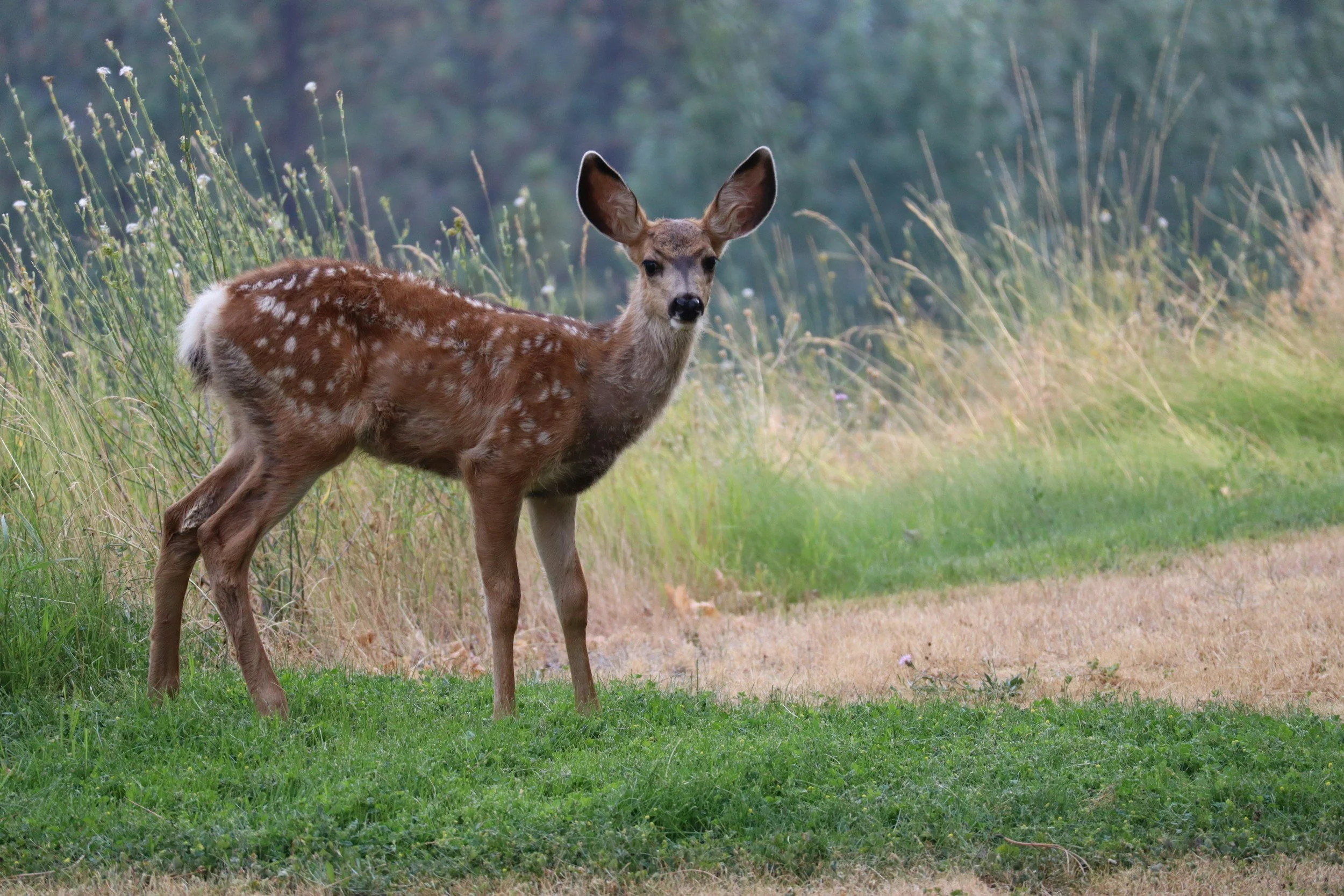
Animal Behavior

January 7–22, 2027
2:00 - 4:30 p.m. EST/1:00 - 3:30 p.m. CST

Animal Behavior

with Dr. Dianne Jedlicka

This course will incorporate field observations in the natural environment surrounding Saugatuck, Michigan into the study of animal behavior. Students will formulate and test hypotheses through the acquisition of data in the field.  Topics covered include: classical learning and instinct, reproductive behaviors, and interactions between and within species. Note: LIBSCI 3521:  Animal Behavior is a separate course and may be taken for credit in addition to this one.  NOTE: SAIC Students must have already taken English 1001 & 1005 in order to enroll in this course.

Pricing Information: Tuition & Fees

Registration Information: Monday, November 16, 2026

SAIC/For Credit Course Code: SCIENCE 3523 001 | 3 credits


About the faculty artist

Dr. Dianne Jedlicka teaches numerous Biology courses at the School of the Art Institute of Chicago, including Animal Behavior, Evolutionary Mammalogy, Ecology (Natural History), and Human Anatomy and Physiology. Her primary research has been at the community level of organization, focusing on the feeding strategies and predation of tree and ground squirrels based on their functional morphology. Observational data collected on nocturnal foraging of the eastern cottontail rabbit were published recently. All of these animals are found throughout the Ox-Bow region and offer Dr. Jedlicka’s students