
Clay in the Field
with E. Saffronia Downing and Rosemary Holliday Hall
$250 lab fee | July 26–August 8 | Exploratory
Clay in the Field is an investigation into environmental clay sculpture. In this course, students will trace clay to its geologic origin as weathered rock, carried by rivers, ground by glaciers, and laid in layers over millennia. We will ask what clay is, how it holds water and memory, and why the shores of Lake Michigan are unique. Venturing to clay deposits, we will learn to see, feel, and understand clay in our environment. We will shape questions and develop projects that deepen our relationship with this ancient material. With earth as our medium, the field of ceramics provides fertile ground from which to explore land-based perspectives in contemporary art. Students in this course will wander sand dune trails, comb beaches, and examine Lake Michigan’s clay deposits as they develop site-responsive clay artworks. We will learn techniques such as coil building, raw clay sculpture, wild clay foraging, wattle and daub construction, and organic burn-out methods. Artists such as Ana Mendieta, Rose B. Simpson, and Gabriel Orozco will ground our conversations about materiality, place-based knowledge, human-nonhuman relationships, land rights, and site specificity. We will explore art historical contexts such as vernacular clay architecture, the land art movement, and environmental art. Students can expect to complete a series of clay “field notes” by making clay writing tools, creating clay sketches, and taking impressions with clay. These field notes will document close observations from Ox-Bow and the surrounding environment. How can clay become a recording device to document observations through material? From geology to gesture, the course will culminate in the creation of an independent, site-specific ceramic sculpture utilizing themes and methods explored in the course. Through this project, students will apply the content of the course, to produce unique environmental artworks of their own design.
SAIC students: This is a 3-credit course; use the course code CERAMICS 673 001.
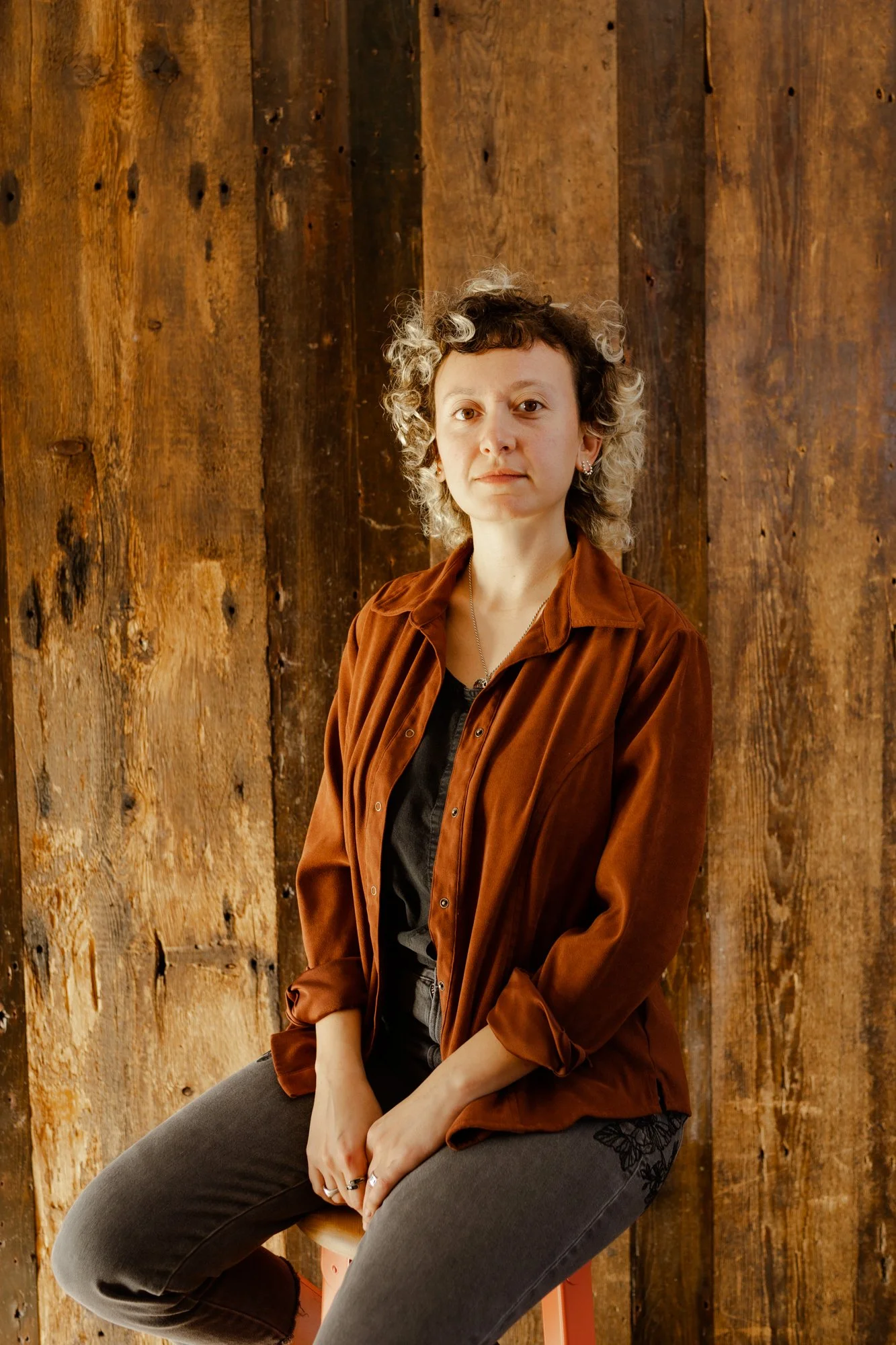
E. Saffronia Downing (she/they) is a ceramic artist and educator whose art practice and research methods are informed by material studies, vernacular art traditions, and ecological thought. Downing is the recipient of various awards, including residencies from PADA, SPACE, and ACRE and fellowships from the College of the Atlantic, the Lunder Institute of American Art, and Ox-Bow. They received their BA in Studio Art from Hampshire College and their MFA in Ceramics from the School of the Art Institute of Chicago.
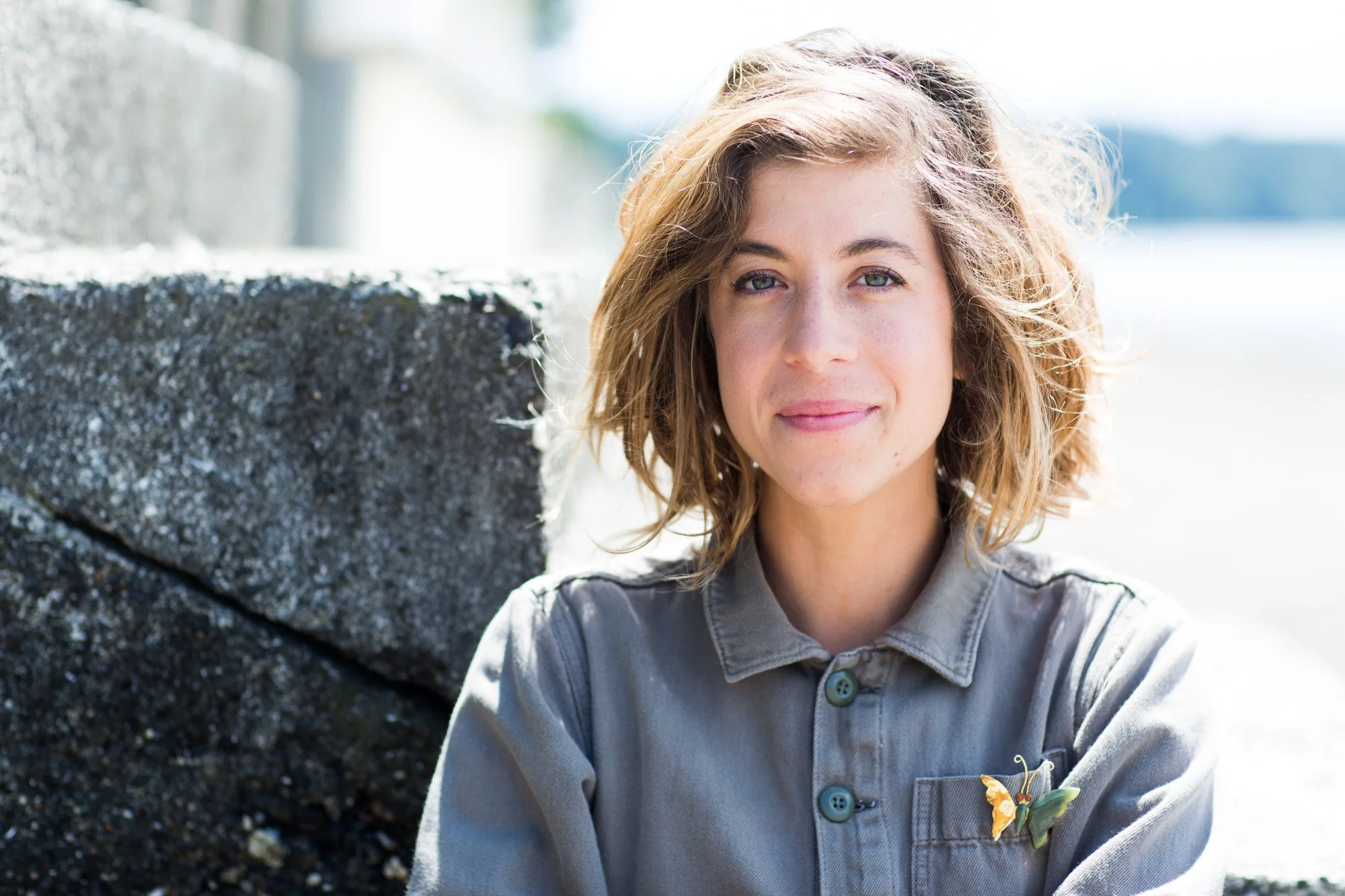
Rosemary Holliday Hall (she/her) is an interdisciplinary artist whose practice spans installation, sculpture, ceramics, moving image, and performance. Her evolving body of work explores the dynamic relationships between nature and culture. Her work has been exhibited in both solo and group exhibitions across the United States and internationally. Hall has been awarded numerous residencies, fellowships, and collaborative research grants with scientists. These include a Nemeth Art Center residency; Taft Gardens Artist Researcher in Residence; an Ex.Change: Artists and Scientists on Climate Change grant; the Art, Science + Culture Grant from the University of Chicago; the Leroy Neiman Fellowship at Ox-Bow; the Maria and Jan Manetti Shrem International Residency at the Royal Drawing School; and a recent residency at the National Center for Ecological Analysis and Synthesis, enabling her to develop new work in collaboration with ecological researchers. Hall is a co-founder of Spore Space, a tiny artist-run exhibition venue in downtown Ojai, CA. She holds an MFA from the School of the Art Institute of Chicago and a BFA from the University of California, Davis, where she also studied environmental horticulture.